
Case Study 02
Online Delegate Registration (ODR)
Designing governance infrastructure from fragmented operational data.
As operations scaled, the challenge was no longer collecting data. It was governing it. I designed ODR to transform fragmented operational activity into a structured system of visibility, control, and scalable decision-making.
Role
Lead UX Designer
Scope
Product strategy, system architecture, workflow design, dashboard UX, governance logic
Users
Delegates, Admins, Sales Teams, Approvers, Leadership
Outcome
Moved key workflows from email and spreadsheets into the product

The Challenge
The business scaled, but the process did not.
The platform was handling registrations, but the operation behind it was fragile. Event setup was manual, sales attribution lived outside the product, and approvals were managed through email. As volume increased, those gaps became harder to manage and harder to scale.
“The issue was not registration. It was operational fragility.”
Manual event setup
Each event had to be configured from scratch, with no reusable setup model or duplication flow.
Offline attribution
Sales contribution was tracked through manually generated links and spreadsheets instead of the product itself.
Invisible approvals
Approvals happened through email, so status, ownership, and progress were not visible in the system.
Before state
Event setupManual, from scratch
→Sales link trackingSpreadsheets
→Approval by emailInbox-based
→Spreadsheet reportingOffline reconciliation
Key Decisions
We stabilised the system before visualising it.
The core decisions focused on workflow clarity, governance, and structural alignment before interface expansion.
Rather than starting with dashboards or surface-level UI changes, I focused first on the structure underneath: workflow states, permissions, attribution, and organisational alignment. That made later interface decisions more reliable and easier to scale.
“We stabilise the system before visualising it.”
1. Lifecycle before reporting
We defined reliable workflow states before designing dashboards.
2. Governance in configuration
Permissions, hierarchy, and attribution were built into setup rather than handled manually.
3. Alignment before execution
The structural direction was validated early with leadership before deeper implementation.
Design Evaluation
The redesign focused on the system behind the interface.
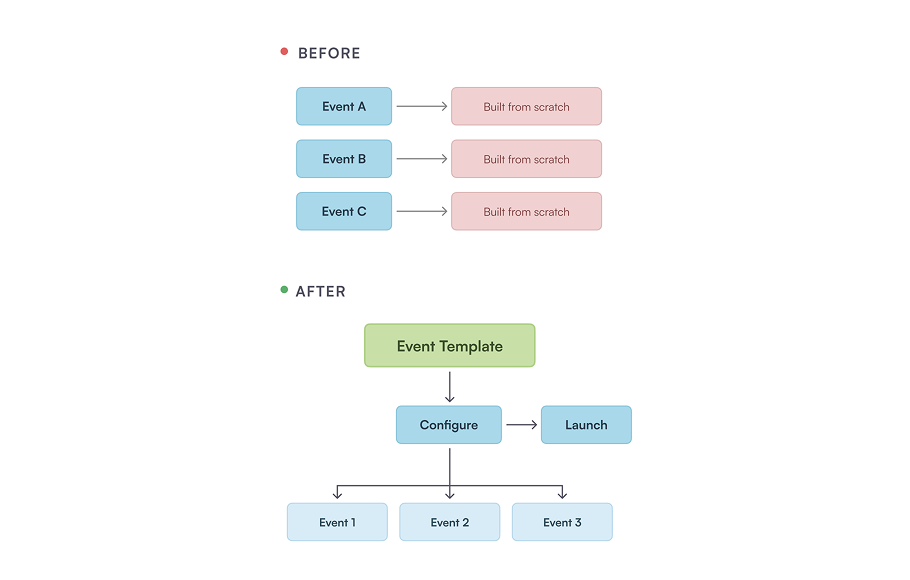
A. Event Setup
From one-off setup to reusable configuration.
To reduce repeated admin work, I shifted event creation from one-off setup to a reusable model with templates, duplication, modular structures, and configurable content.
Templates replaced repeated setup
Modular structures reduced admin effort
Configuration became scalable rather than manual
“From building every event from scratch to configuring from a reusable system.”
B. Approval workflow
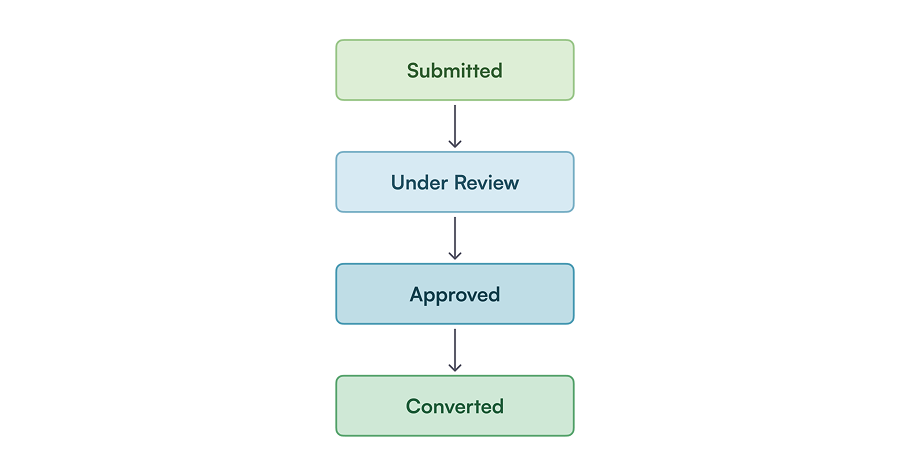
Approvals moved from inboxes into the product.
Approvals were moved from inbox coordination into structured workflow states, making progress visible and easier to track.
Visibility updated with each state
Reporting aligned to workflow progress
Decisions became part of the system, not email trails
“Approvals became system states, not email threads.”
C. Role-based governance and reporting
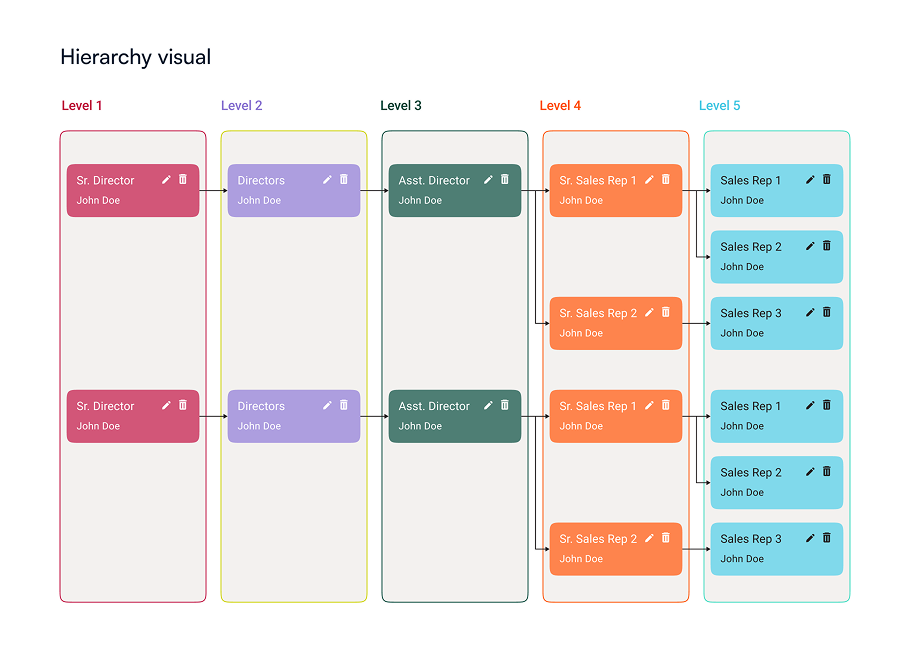
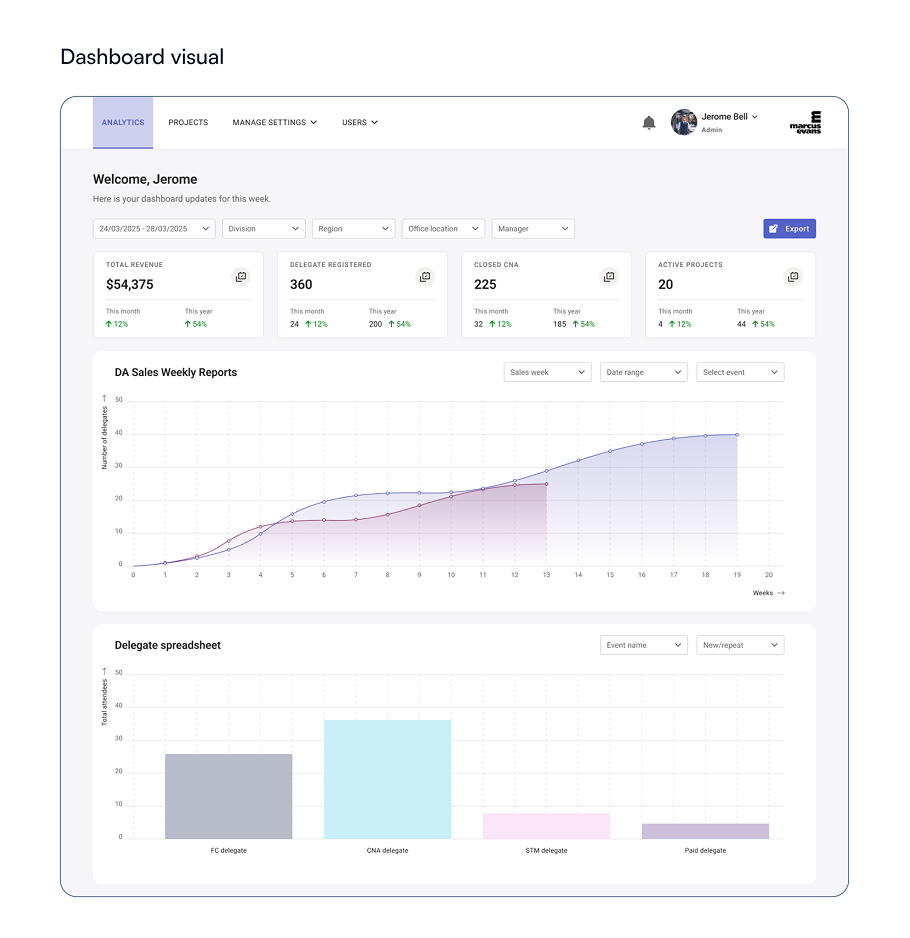
I translated the sales structure into role-based permissions, visibility, and reporting logic so contribution could be tracked through the platform instead of manual reconciliation.
Role-scoped visibility
Automatic attribution roll-up
Dashboards powered by system data
“The product started reflecting the organisation behind it.”
Impact
The platform moved from manual coordination to system-led governance.
The biggest outcome was not just usability improvement, but a stronger operational foundation.
The redesign improved more than the interface. It reduced manual coordination, increased approval visibility, strengthened attribution logic, and created a more reliable reporting foundation.
“We stabilise the system before visualising it.”
1. Reduced manual coordination
Key workflows moved out of inboxes and spreadsheets and into the product.
~60%
reduction in manual coordination
2. Improved approval visibility
Lifecycle states made progress easier to track across teams.
100%
visibility across key approval stages
3. More reliable attribution
Sales contribution and hierarchy-based roll-ups became part of platform logic.
100%
attribution captured within the platform
4. Stronger reporting foundation
Dashboards reflected structured system data instead of manual reconciliation.
~70%
faster reporting readiness
Reflection
Interfaces should express system logic, not compensate for its absence.
The biggest lesson from this project was that internal UX becomes stronger when the system behind the interface is clearly defined.
ODR reinforced that designing for scale is not only about improving usability. It is also about shaping the rules, states, and ownership that make complex workflows reliable across teams. The real shift was moving governance out of human coordination and into the product itself.
1. Governance is a design responsibility
In complex internal tools, accountability cannot live outside the product. It has to be designed into workflows, permissions, and visibility.
Good systems make ownership clear.
2. Strategic alignment shapes better outcomes
Early alignment on structure reduced design risk and made the build more stable before deeper implementation began.
Senior UX work starts before screens.
Closing takeaway
Designing for scale meant shaping the system behind the screen, not just the screen itself.
Want more? Explore other case studies!