Build
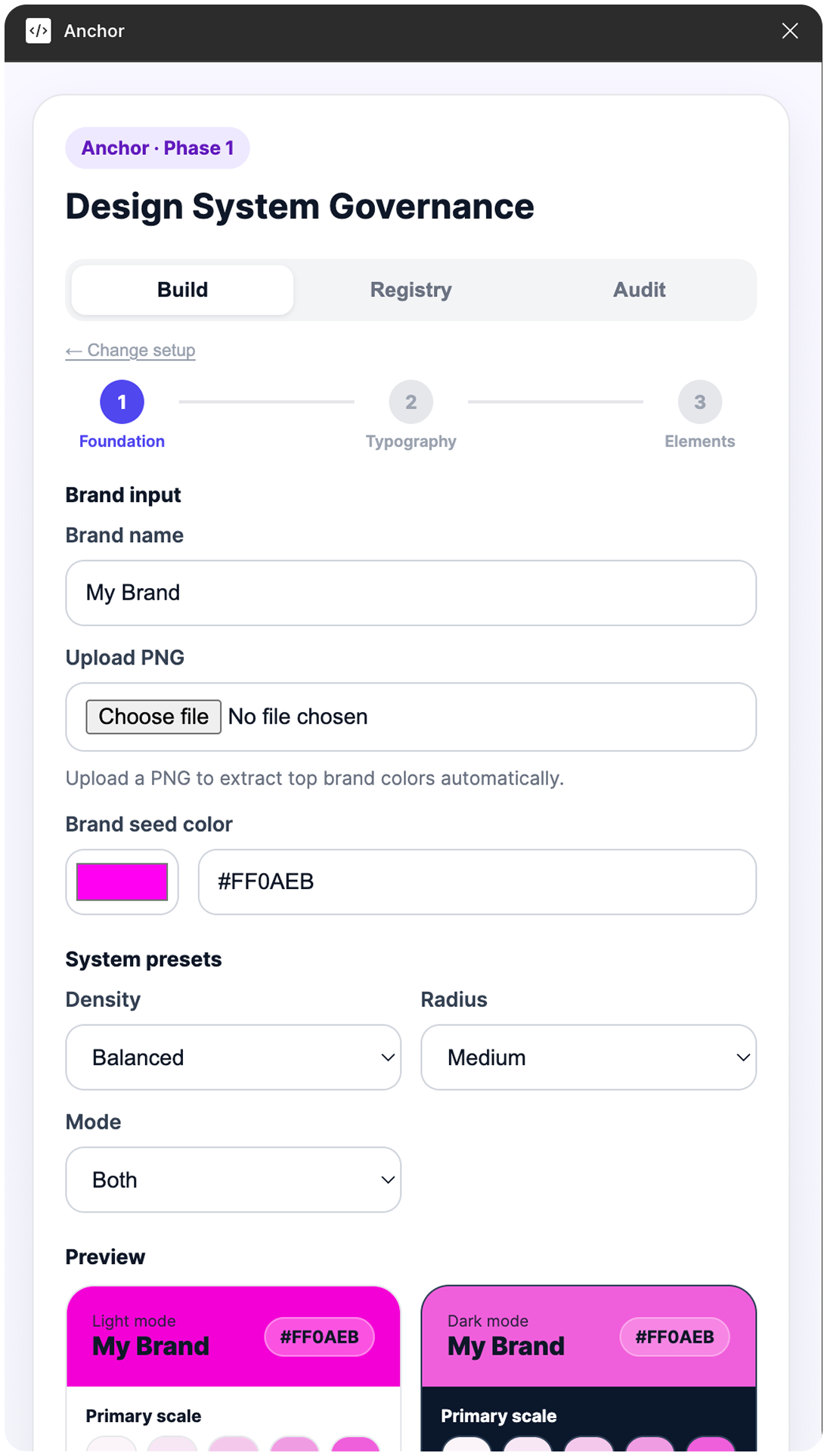
Build new systems from scratch in 3 simple steps(Colours, Typography, and Components)
A Figma plugin designed to reduce design drift, speed up system adoption, and cut developer rework by making tokens, styles, and components enforceable.
“Design systems fail less from creation and more from drift.”

Overview
The real friction showed up after a system was created: unbound colors, inconsistent spacing, unstyled text, broken component relationships, messy legacy files, and repeated cleanup between design and development. Anchor was designed to move that cleanup upstream by making tokens, styles, and components governable inside Figma.
“The real problem was not setup. It was preserving consistency at scale.”
Build new systems from scratch in 3 simple steps(Colours, Typography, and Components)
An approved source of truth for tokens, styles, components, and policy.
A way to detect design drift inside real files before handoff turns into engineering cleanup.
A way to absorb existing systems, not just generate new ones from scratch.
Problem
Teams usually have some design system assets, but the actual file state drifts over time. Tokens stop being bound, components detach, styles become manual, and legacy systems become harder to adopt than rebuild. That is where developer rework begins: visual mismatch, CSS cleanup, token translation, and manual alignment between design and code.
Tokens and styles stop behaving like system primitives.
Developers normalize what should have been enforced upstream.
Existing systems are often too messy to trust and too expensive to rebuild.
01 // OPTIMAL STATE
System Created
02 // DEVIATION DETECTED
Drift
03 // INTERVENTION REQ
Rework
04 // PROCESS BLOCKED
Delay
Vision
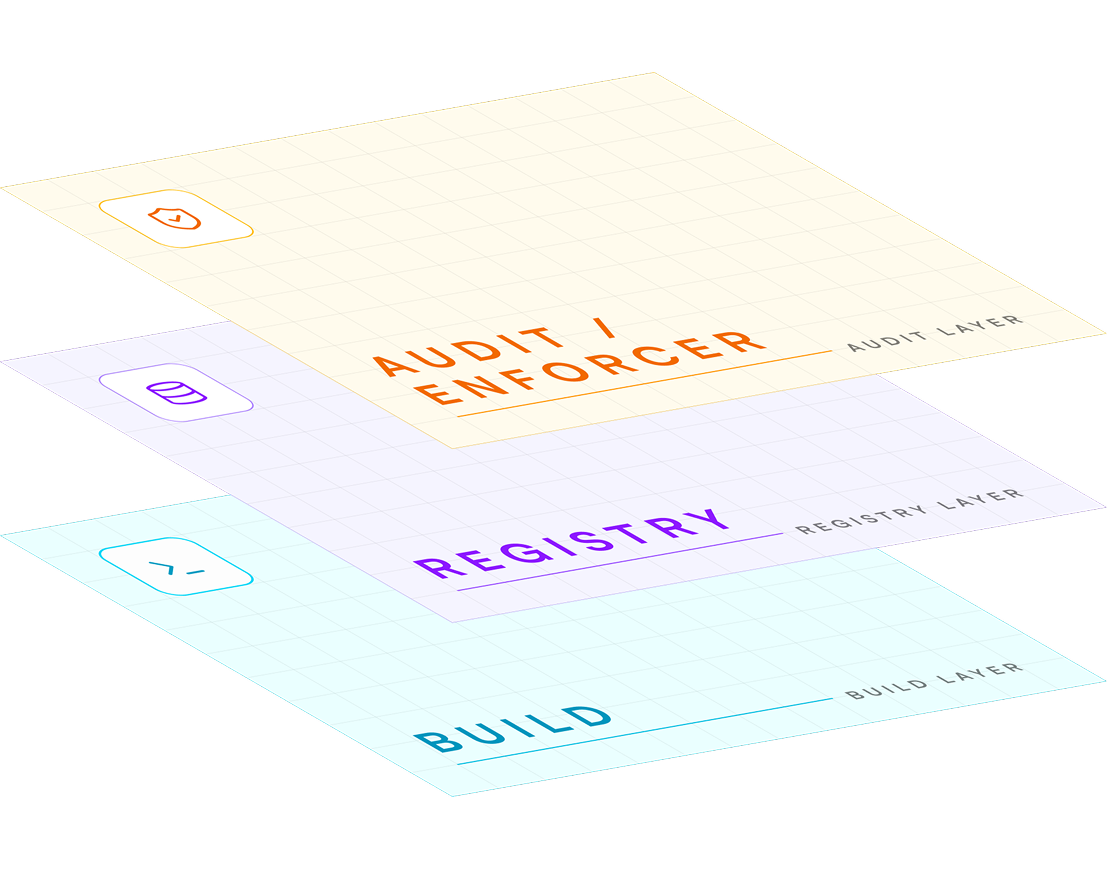
Anchor was shaped around three layers: generate a clean starting system, publish an approved registry, and audit files against that registry. That changes the role of the plugin from “design helper” to “design governance infrastructure.”
Product idea
Generator, registry, audit, enforcement, and adoption are treated as connected layers rather than disconnected utilities. The operating model is what makes the plugin durable.
Solution
Anchor was sequenced to become useful before it became intelligent.
I built the system in stages so each layer could support the next one. The result is a plugin that can generate systems, publish a registry, audit files, adopt existing systems, bind tokens into real files, and help users fix violations inside Figma.
Generate colors, typography, foundations, and component foundations inside Figma.
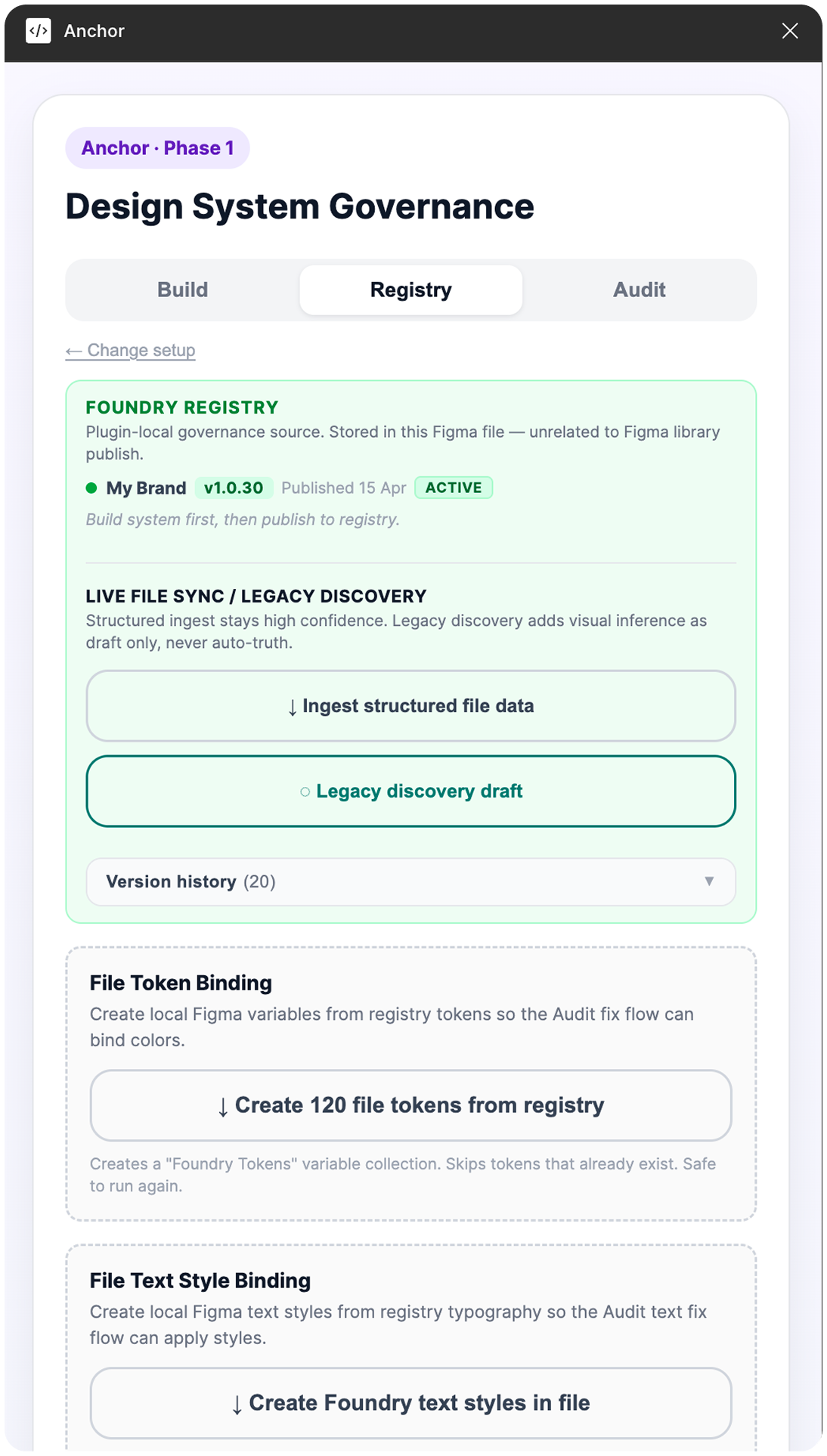
Publish an active version of truth with policy, version history, adoption drafts, and file bindings.
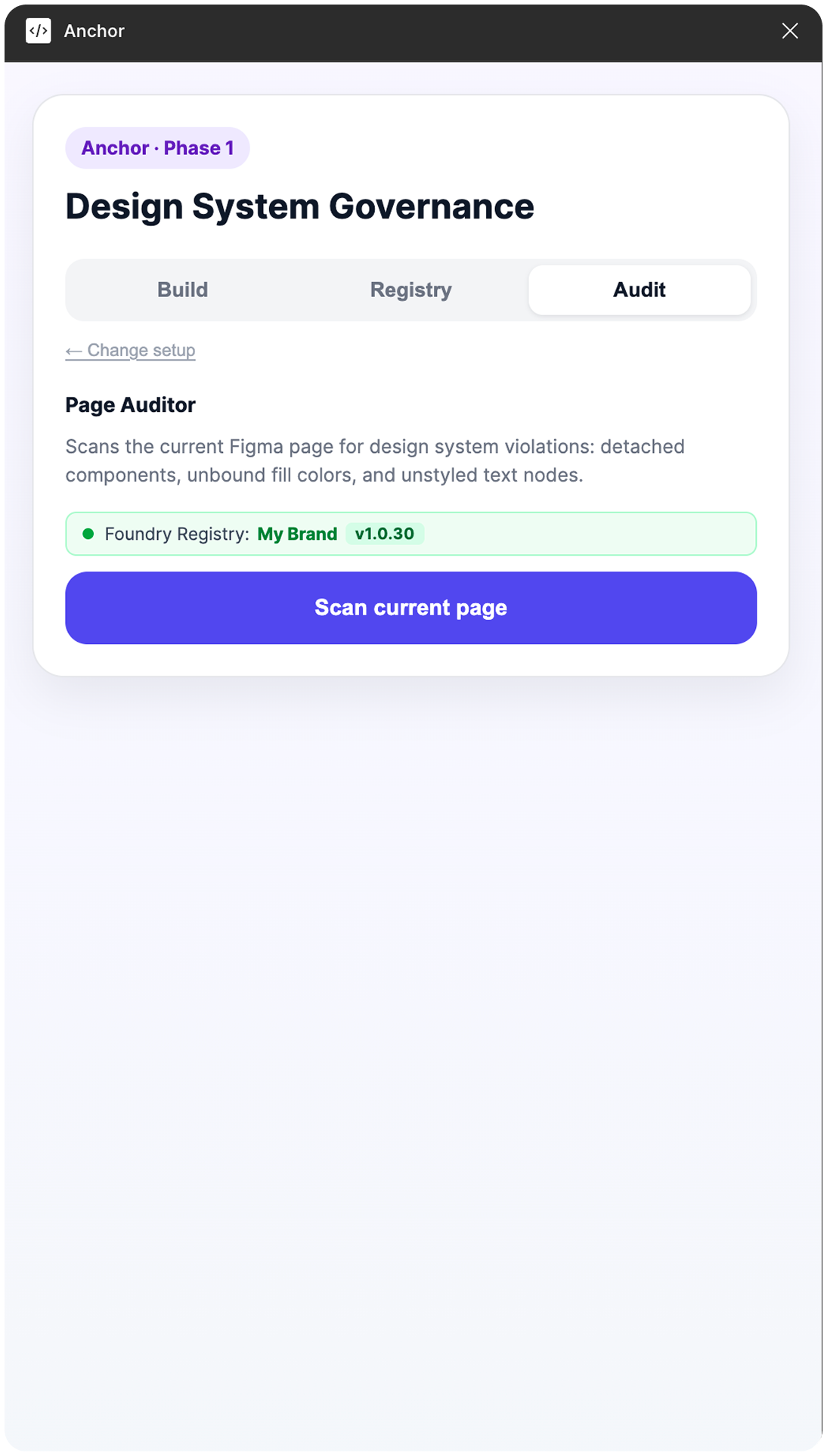
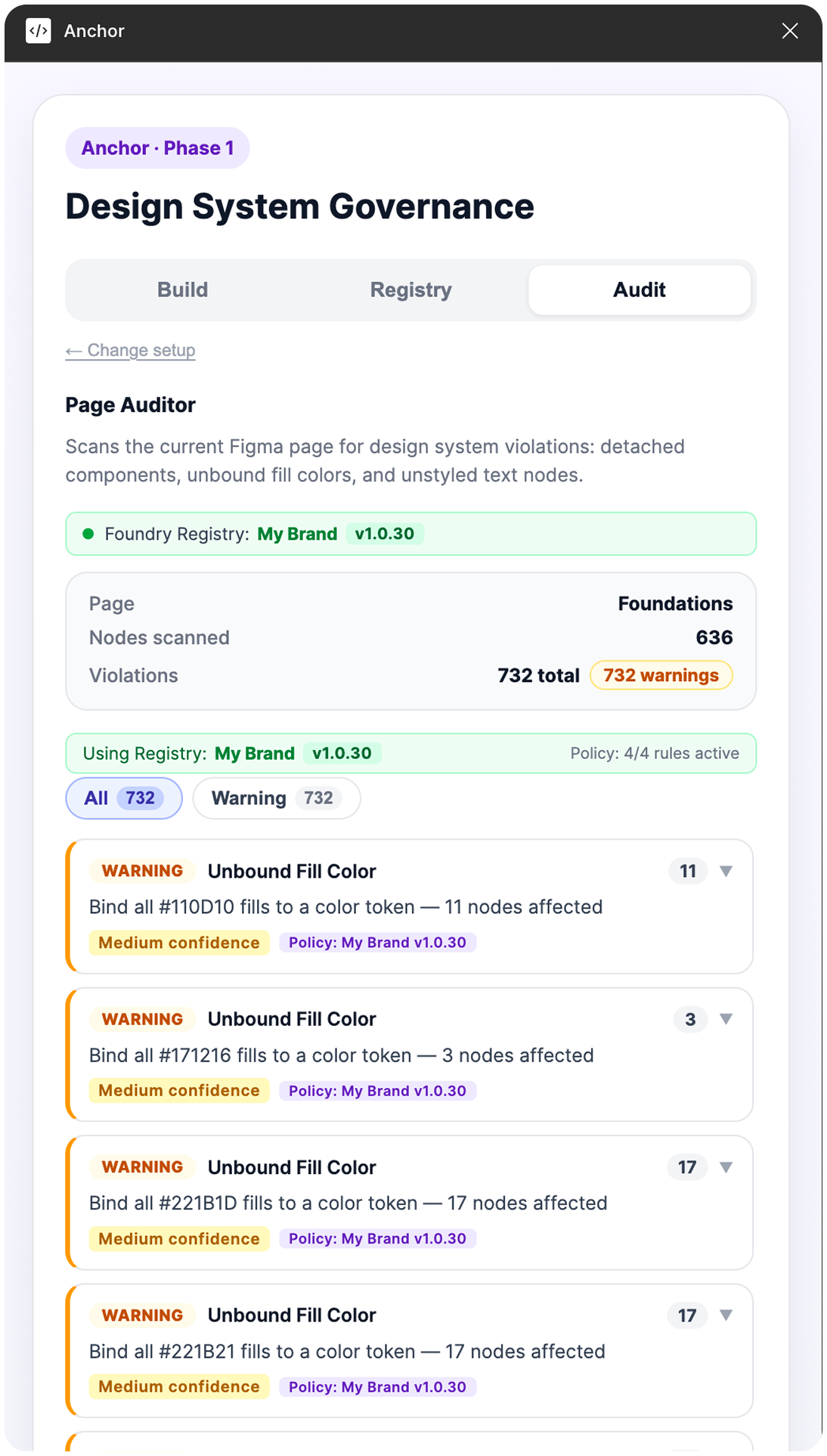
Scan live files for color, text, spacing, and component integrity issues.
Fix warnings at group level or item level, resolve them, reopen them, or accept exceptions intentionally.
Build
Registry
Audit
Enforce
Decisions
I avoided designing Anchor as a generic AI generator. Instead, I used a governance-first structure where every new capability had to strengthen trust, not bypass it.
I chose to build approval, audit, and enforcement first so future AI outputs could be governed.
Adopted systems and inferred legacy artifacts become drafts first, not truth.
The plugin works where system drift actually happens: inside Figma files.
Adoption
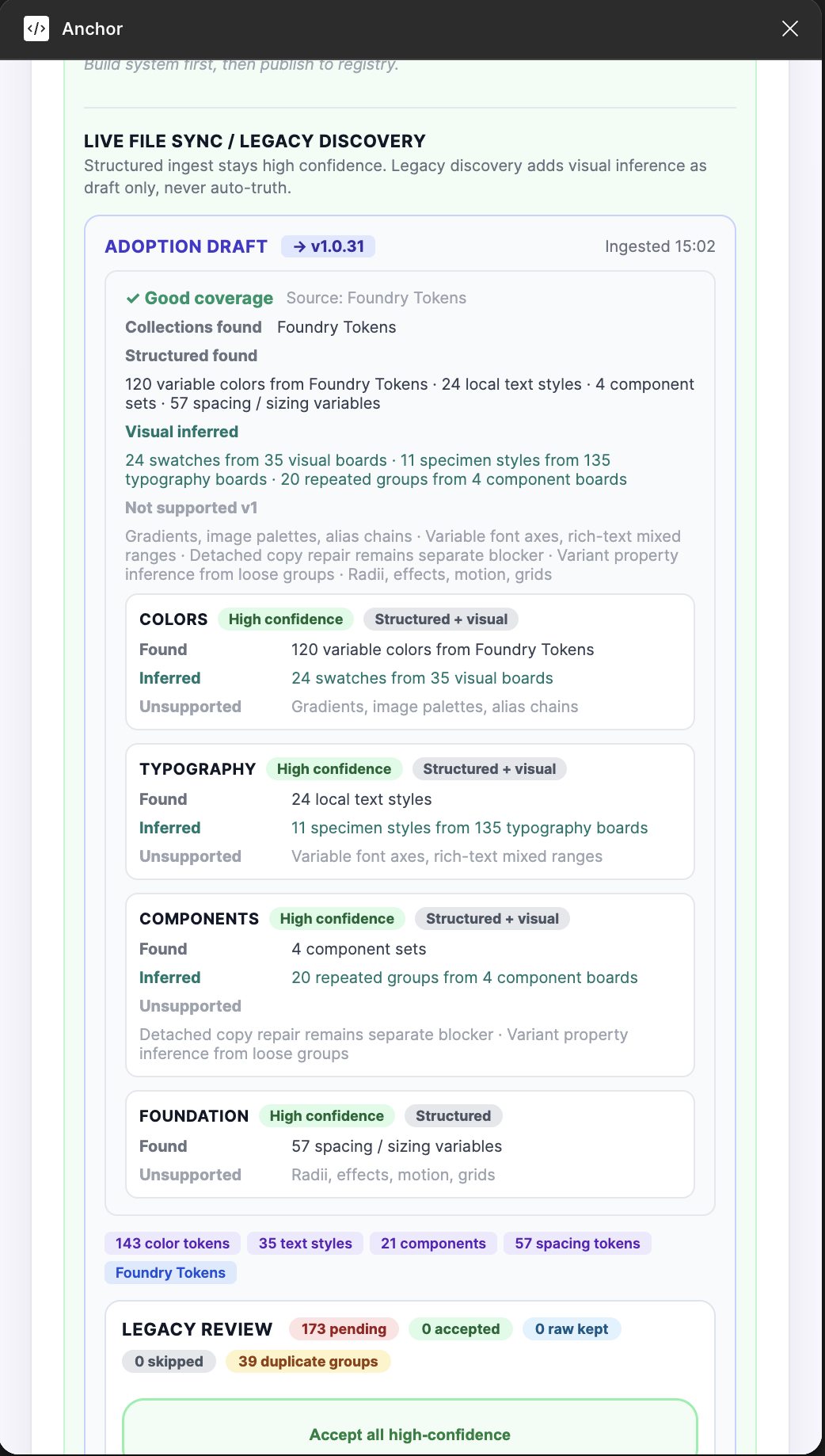
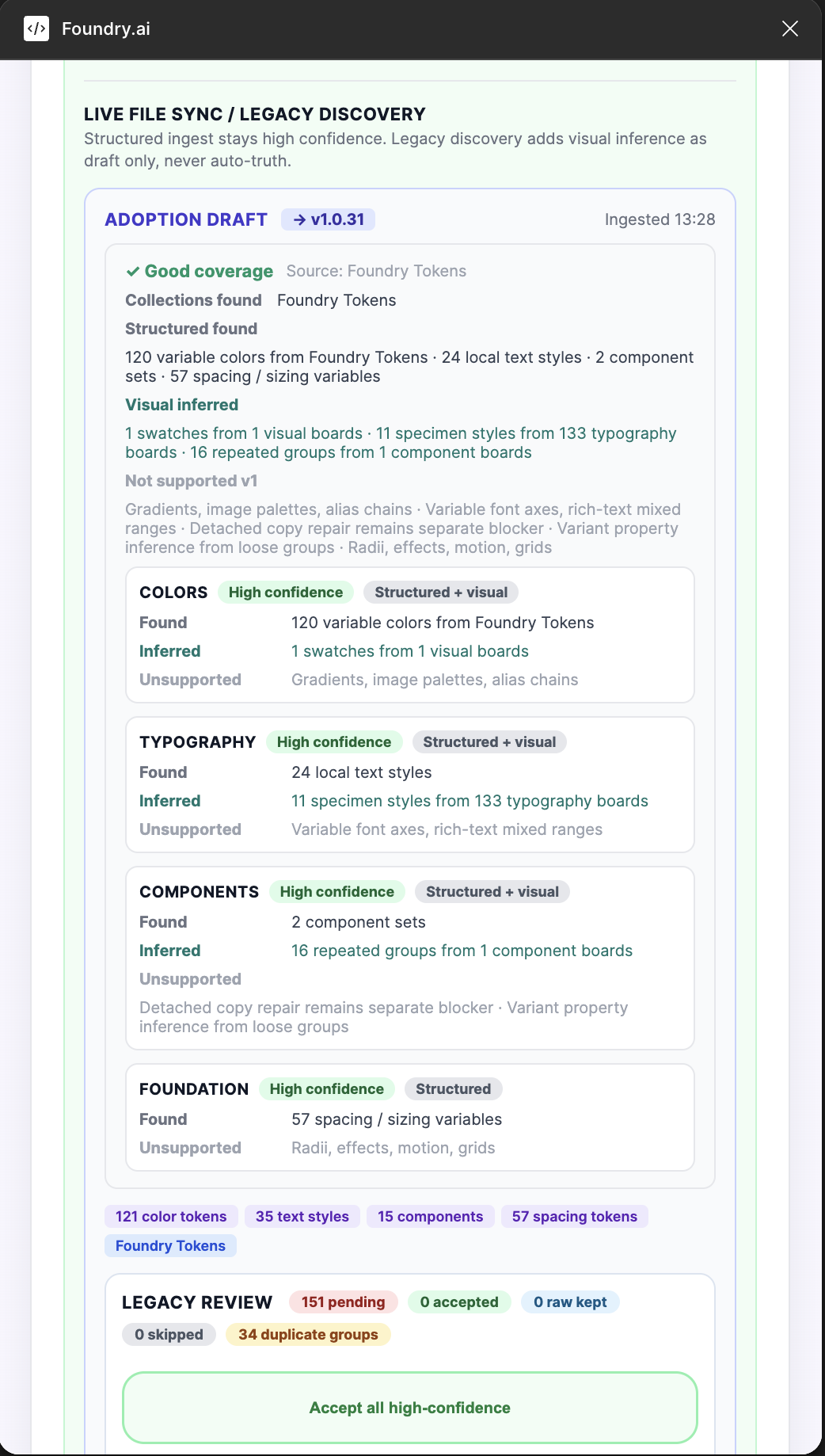
A major constraint in real teams is that systems already exist in different states of quality. Anchor can ingest structured file data, discover visual legacy artifacts, create a draft registry, and let users review what was found, inferred, missing, or unsupported before publishing a new active version.
Variables, styles, and components already present in file.
Legacy palettes, specimen boards, and reusable groups turned into reviewable draft candidates.
Accept, keep raw, skip, or normalize before publish.
AI Strategy
I intentionally did not start with AI generation. The plugin was first built as a functioning system: generation, registry, audit, enforcement, adoption, and file binding. That gives AI something stable to work inside. Without that foundation, AI would only generate more variation, more drift, and more downstream cleanup.
The AI layer is planned to help users generate cleaner and more effective design systems, not just more screens. It will support better token structure, stronger role assignment, cleaner typography systems, and faster system setup while keeping everything inside a governed registry.
AI can generate better starting systems so fewer mismatches reach code.
Users spend less time manually naming, grouping, and structuring primitives.
AI should operate inside registry rules, not outside them.
Impact
The planned AI layer is useful because it reduces repetitive setup and post-design cleanup. Instead of only generating layouts, it will help create cleaner token structures, better semantic grouping, stronger typography systems, and more consistent component foundations. That means less token translation, less CSS rework, fewer manual overrides, and fewer handoff corrections for developers.
Cleaner generated systems reduce manual mapping between design and code.
Registry-backed fixes catch drift before engineering absorbs it.
Existing systems become governable without rebuilding everything from zero.
Current state
Today the product can generate a system, publish an active registry, audit files, fix many violations, adopt structured and legacy systems, create file tokens, and support reviewable versioned updates. That matters because it proves the core operating model before the intelligence layer is added.
Reflection
This project reinforced a clear lesson: intelligence is more valuable when it sits on top of a stable structure. Anchor is being shaped so AI becomes a force multiplier for system quality, not a shortcut around governance.
What I would take further
AI-assisted system generation, stronger semantic token mapping, more reliable component integrity automation, and deeper design-to-code bridge layers.
Positioning
Most adjacent tools optimize for one of three things: generating interfaces faster, transporting tokens across systems, or documenting components in code. Anchor is being shaped around a different problem: keeping design systems governable inside real Figma files.
That is why I built it as a governance-first product with a registry, audit, enforcement, and adoption workflow before adding AI generation. Internally, I framed the difference as Generator vs Governor: tools like Figr focus on creation velocity, while Anchor focuses on system integrity, deterministic enforcement, and reducing design debt before it reaches engineering.
The long-term moat is the Headless Token Registry and the bridge between Figma truth and production truth, not just another prompt-to-UI workflow.
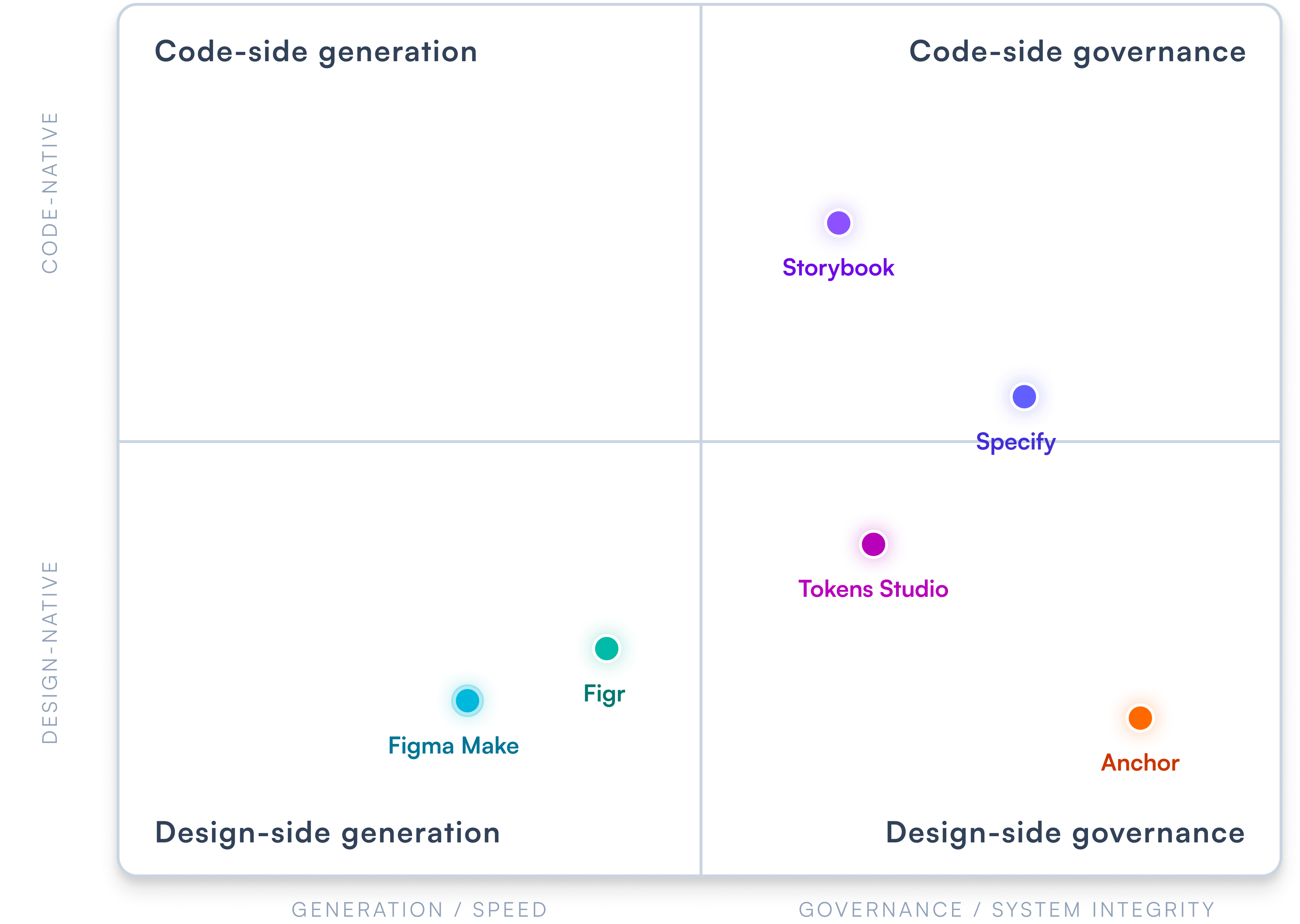
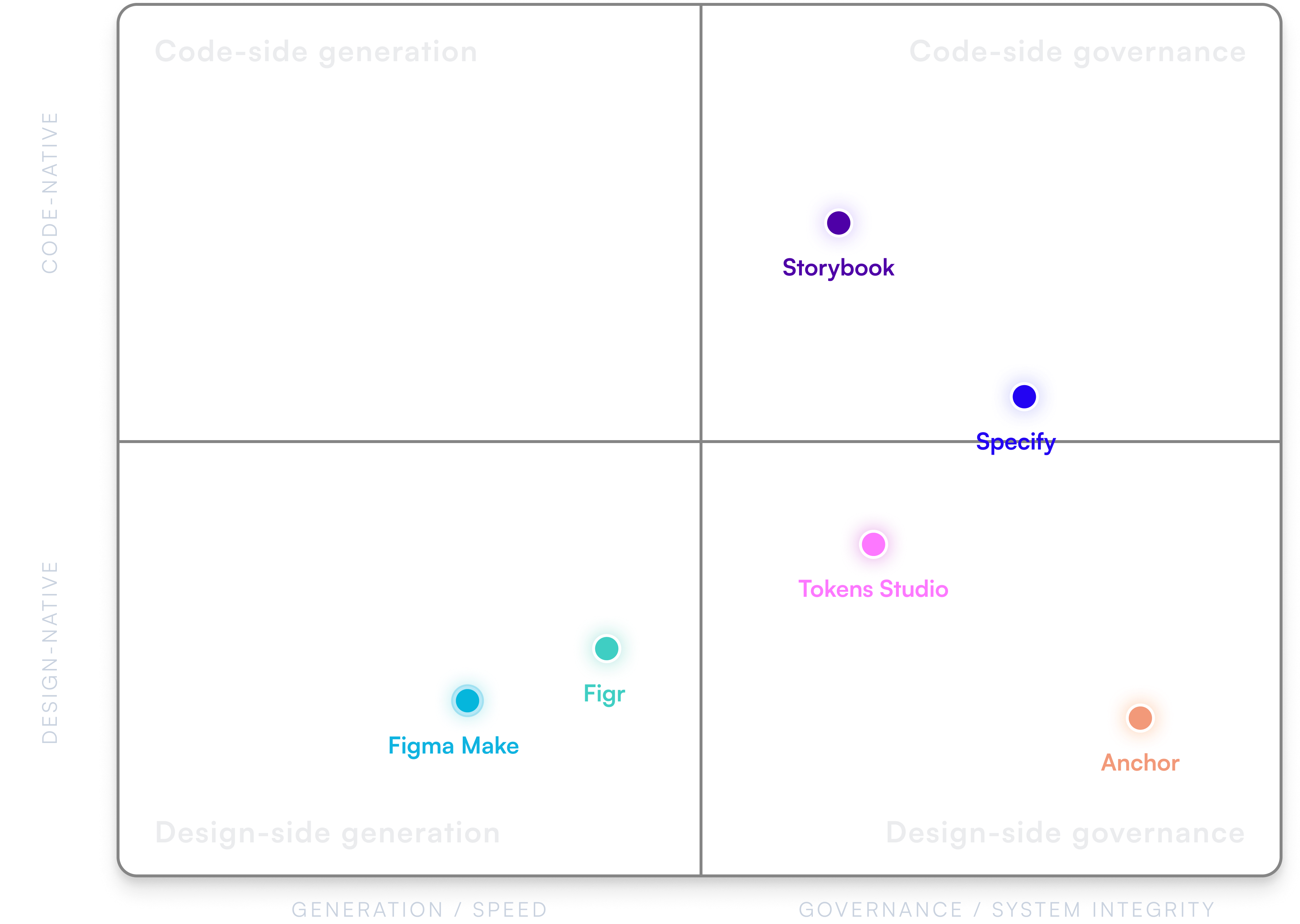
Anchor is not being built as a faster way to draw screens. It is being built as a design-native governance layer: generate when needed, adopt what already exists, publish approved truth, audit real files, and reduce downstream developer cleanup. That positioning is deliberate because generated output alone is easy to copy, while registry-backed enforcement is much harder to replace.
Why this matters
Speed tools help teams create more. Governance tools help teams keep systems usable. In practice, the second problem is where design debt becomes engineering rework.
Want more? Explore other case studies!